

Volume 32, Issue 4 (1-2024)
JGUMS 2024, 32(4): 334-349 |
Back to browse issues page


Research code: IR.IAU.SEMNAN.REC.1399.007
Ethics code: IR.IAU.SEMNAN.REC.1399.007


Download citation:
BibTeX | RIS | EndNote | Medlars | ProCite | Reference Manager | RefWorks
Send citation to:


BibTeX | RIS | EndNote | Medlars | ProCite | Reference Manager | RefWorks
Send citation to:
mostafa M, sedaghat M, makvand hoseini S, alinaghi S A. Effect of Schema Therapy on Using Adaptive and Maladaptive Cognitive-Emotion Regulation Strategies in People With HIV. JGUMS 2024; 32 (4) :334-349
URL: http://journal.gums.ac.ir/article-1-2600-en.html
URL: http://journal.gums.ac.ir/article-1-2600-en.html


1- Department of Psychology, Semnan Branch, Islamic Azad University, Semnan, Iran
2- Department of Psychology, South Tehran Branch, Islamic Azad University, Tehran, Iran
3- Department of clinical Psychology, Faculty of Psychology and Education, Semnan University, Semnan, Iran.
4- Research Deputy of Iranian Research Center for HIV/AIDS (IRCHA), Tehran University of Medical Sciences (TUMS), Tehran, Iran.
2- Department of Psychology, South Tehran Branch, Islamic Azad University, Tehran, Iran
3- Department of clinical Psychology, Faculty of Psychology and Education, Semnan University, Semnan, Iran.
4- Research Deputy of Iranian Research Center for HIV/AIDS (IRCHA), Tehran University of Medical Sciences (TUMS), Tehran, Iran.
Full-Text [PDF 5566 kb]
(661 Downloads)
| Abstract (HTML) (1613 Views)
Full-Text: (1894 Views)
Introduction
Human immunodeficiency virus (HIV) infection can affect all mental, social, physical, and spiritual aspects of life, and can cause fear among affected people [1]. Therefore, the assessment of psychological, family, and social problems in these people is very important [2]. Recent studies have focused on the role of cognitive skills in people with chronic diseases, including HIV, and believe that weakness in these skills can have devastating effects on treatment, quality of life, mental health, and adaptation to these diseases [3]. In this regard, emotion regulation has been considered important for the treatment of mental pathology and some physical pathology cases [4]. A study showed that people with HIV experience high emotional distress [5].
Schema therapy has a positive effect on cognitive emotion regulation strategies [6, 7, 8]. The first goal of this intervention is psychological awareness and conscious control over schemas, while its ultimate goal is to improve schemas and coping styles [7]. The present study aims to examine the effect of schema therapy on the cognitive emotion regulation of people with HIV.
Methods
This is an interventional study with a pretest-posttest design. The study population was all people with HIV referred to the behavioral disorders counseling center of Imam Khomeini Hospital in Tehran, Iran in 2019-2020. Of these, 30 patients were selected using a convenience sampling method and randomly divided into two groups of 15: Intervention and control. Before the intervention, the short form Cognitive Emotion Regulation Questionnaire (CERQ-SF) was completed by all participants. Then, the intervention group received group schema therapy at ten sessions of 120 minutes (two sessions per week). At the end of the intervention, both groups completed the CERQ-SF again. The CERQ-SF was developed by Garnefski et al. [24] and has 36 items and 9 subscales, including self-blame, other-blame, rumination, catastrophizing, putting into perspective, positive refocusing, positive appraisal, acceptance, and refocusing on planning. The scoring is from 1 (almost never) to 5 (almost always). Each subscale contains 4 items. The score of each subscale ranges from 4 to 20. The higher score shows more frequent use of cognitive emotion regulation strategies. Garnfsky et al. [24] reported a Cronbach’s alpha ranging from 0.62 to 0.80 for the CERQ-SF [9]. In the current study, it was at a range of 0.71 to 0.89. The data analysis was performed in SPSS software version 26 using descriptive statistics (frequency, percentage, mean, standard deviation) and analysis of covariance (ANCOVA).
Results
Most of participants in both groups were male with diploma. Their age range was 26-50 years. Chi-square test was used to investigate the difference between the groups in terms of gender, education level and age, whose results indicated the homogeneity of the groups (Table 1).
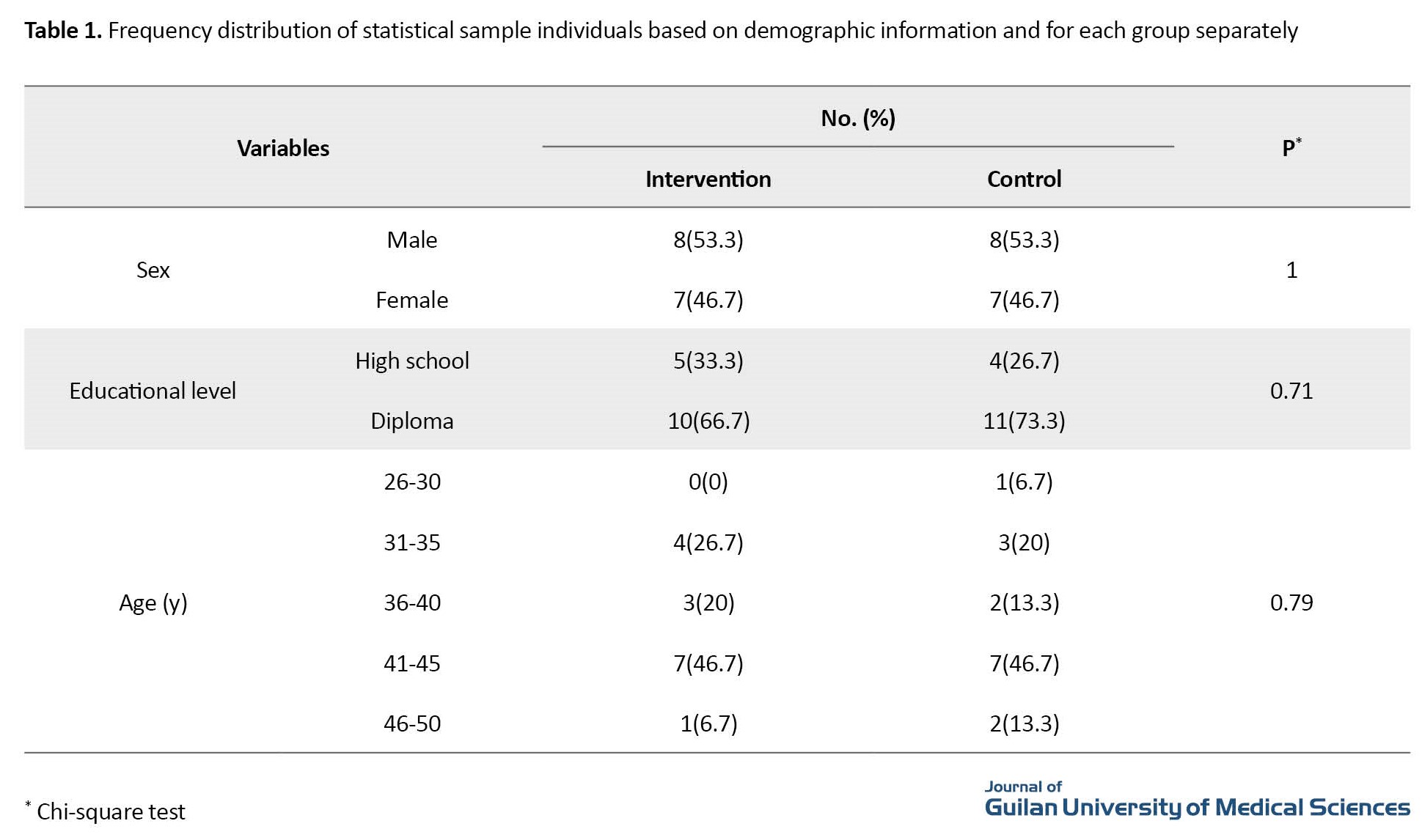
Before analyzing the data by ANCOVA, Shapiro-Wilk test was used to check the normality of the data distribution, who results showed that it was normal (P>0.05). To check the homogeneity of the variances, Levene’s test was used whose results showed that the assumption was met (P>0.05). The assumption of the homogeneity of the regression slope was also confirmed (P>0.05).
Table 2 shows the results of ANCOVA that was used to examine the difference between the two groups.
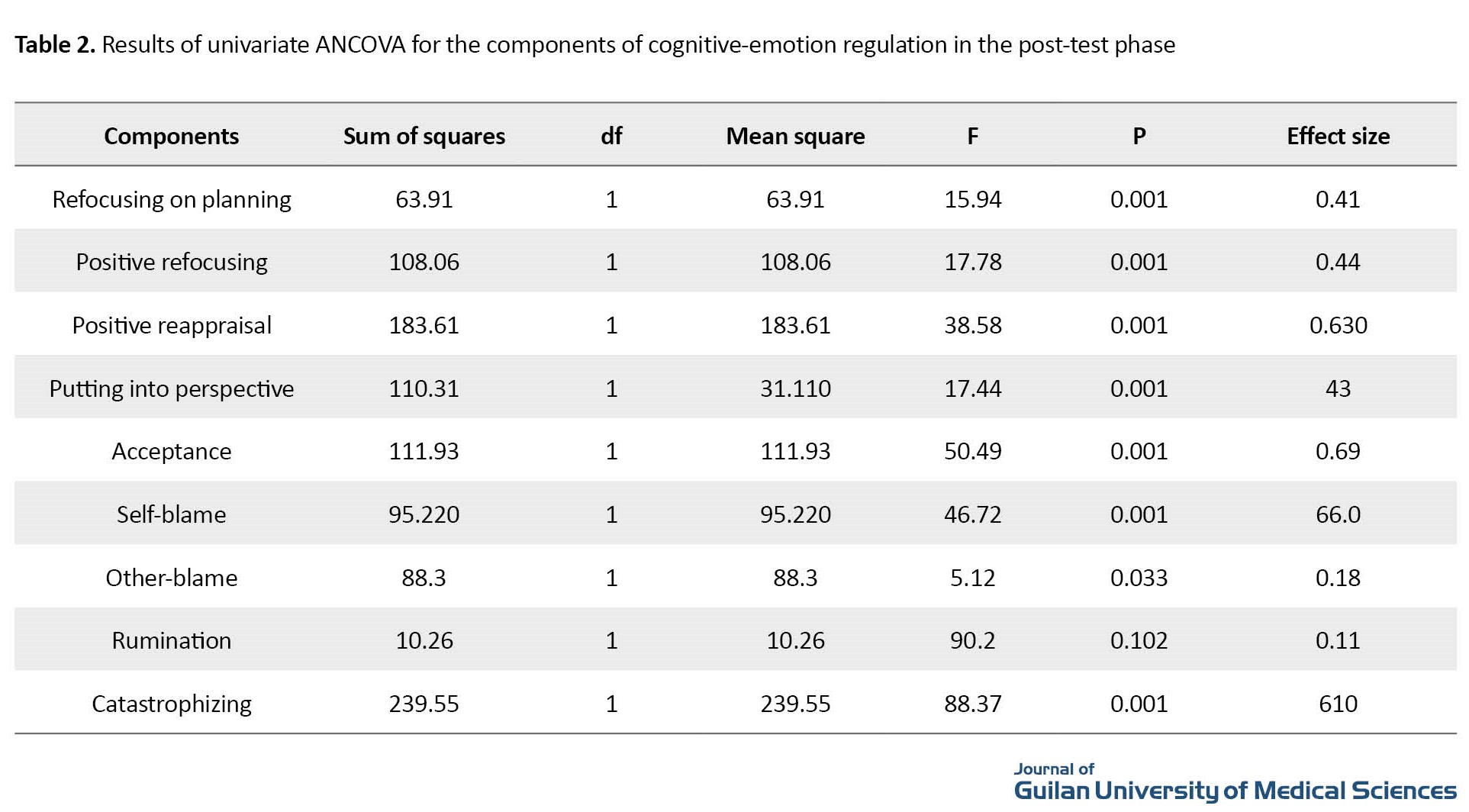
There was a significant difference between the groups in the scores of CERQ-SF components (P<0.001), except for the components of other-blame and rumination (P=0.033 and P=0.102, respectively). Therefore, schema therapy had an effect on adaptive and maladaptive strategies of cognitive-emotional regulation in people with HIV, except for other-blame and rumination strategies.
Conclusion
The purpose of this study was to investigate the effect of schema therapy on adaptive and maladaptive cognitive-emotional regulation strategies in people with HIV. Adaptive emotional regulation strategies make people evaluate the consequences of their illness with a different perspective and have a positive outlook to their illness which causes the patient to experience less discomfort and psychological distress and cope with the disease more easily and try to improve quality of life [10].
Schema therapy can play a substantial role in reducing negative behaviors and increasing positive behaviors by informing the person about positive and negative emotions, resulting in acceptance and expression of them [8].
The results showed that schema therapy improved the cognitive-emotional regulation of these patients. It could increase the use of adaptive strategies (putting into perspective, positive refocusing, positive reappraisal, acceptance, and refocusing on planning) and reduce the use of maladaptive strategies (self-blame, catastrophizing). In this study, schema therapy did not have a significant effect on the use of other-blame and rumination strategies in people with HIV. These people blame others for contracting HIV and are unable to manage their behavior and feelings which can cause discomfort, stress, hostility, and finally intensify other-blame and rumination [10].
Ethical Considerations
Compliance with ethical guidelines
Ethical principles were observed by obtaining informed consent from the participants and keeping their information confidential. This study was approved by the Ethics Committee of Islamic Azad University, Semnan Branch (Code: IR.IAU.SEMNAN.REC.1399.007).
Funding
This research did not receive any funding from any organizations in the public, commercial or non-profit sectors.
Authors' contributions
Study concept and design: Maryam Sadat Mostafa and Mastooreh Sedaghat; Critical revision, study supervision: Maryam Sadat Mostafa, Mastooreh Sedaghat, Seyed Ahmad Seyed Alinaghi; Statistical analysis: Maryam Sadat Mostafa and Seyed Ahmad Seyed Alinaghi; initial draft preparation and acquisition, analysis, or interpretation of data: All authors.
Conflicts of interest
The authors declare that there is no conflict of interest.
Acknowledgements
The authors would like to thank the staff of the Behavioral Disorders Counseling Center of Imam Khomeini Hospital in Tehran and all the people participated in this study for their cooperation.
References
Human immunodeficiency virus (HIV) infection can affect all mental, social, physical, and spiritual aspects of life, and can cause fear among affected people [1]. Therefore, the assessment of psychological, family, and social problems in these people is very important [2]. Recent studies have focused on the role of cognitive skills in people with chronic diseases, including HIV, and believe that weakness in these skills can have devastating effects on treatment, quality of life, mental health, and adaptation to these diseases [3]. In this regard, emotion regulation has been considered important for the treatment of mental pathology and some physical pathology cases [4]. A study showed that people with HIV experience high emotional distress [5].
Schema therapy has a positive effect on cognitive emotion regulation strategies [6, 7, 8]. The first goal of this intervention is psychological awareness and conscious control over schemas, while its ultimate goal is to improve schemas and coping styles [7]. The present study aims to examine the effect of schema therapy on the cognitive emotion regulation of people with HIV.
Methods
This is an interventional study with a pretest-posttest design. The study population was all people with HIV referred to the behavioral disorders counseling center of Imam Khomeini Hospital in Tehran, Iran in 2019-2020. Of these, 30 patients were selected using a convenience sampling method and randomly divided into two groups of 15: Intervention and control. Before the intervention, the short form Cognitive Emotion Regulation Questionnaire (CERQ-SF) was completed by all participants. Then, the intervention group received group schema therapy at ten sessions of 120 minutes (two sessions per week). At the end of the intervention, both groups completed the CERQ-SF again. The CERQ-SF was developed by Garnefski et al. [24] and has 36 items and 9 subscales, including self-blame, other-blame, rumination, catastrophizing, putting into perspective, positive refocusing, positive appraisal, acceptance, and refocusing on planning. The scoring is from 1 (almost never) to 5 (almost always). Each subscale contains 4 items. The score of each subscale ranges from 4 to 20. The higher score shows more frequent use of cognitive emotion regulation strategies. Garnfsky et al. [24] reported a Cronbach’s alpha ranging from 0.62 to 0.80 for the CERQ-SF [9]. In the current study, it was at a range of 0.71 to 0.89. The data analysis was performed in SPSS software version 26 using descriptive statistics (frequency, percentage, mean, standard deviation) and analysis of covariance (ANCOVA).
Results
Most of participants in both groups were male with diploma. Their age range was 26-50 years. Chi-square test was used to investigate the difference between the groups in terms of gender, education level and age, whose results indicated the homogeneity of the groups (Table 1).
Before analyzing the data by ANCOVA, Shapiro-Wilk test was used to check the normality of the data distribution, who results showed that it was normal (P>0.05). To check the homogeneity of the variances, Levene’s test was used whose results showed that the assumption was met (P>0.05). The assumption of the homogeneity of the regression slope was also confirmed (P>0.05).
Table 2 shows the results of ANCOVA that was used to examine the difference between the two groups.
There was a significant difference between the groups in the scores of CERQ-SF components (P<0.001), except for the components of other-blame and rumination (P=0.033 and P=0.102, respectively). Therefore, schema therapy had an effect on adaptive and maladaptive strategies of cognitive-emotional regulation in people with HIV, except for other-blame and rumination strategies.
Conclusion
The purpose of this study was to investigate the effect of schema therapy on adaptive and maladaptive cognitive-emotional regulation strategies in people with HIV. Adaptive emotional regulation strategies make people evaluate the consequences of their illness with a different perspective and have a positive outlook to their illness which causes the patient to experience less discomfort and psychological distress and cope with the disease more easily and try to improve quality of life [10].
Schema therapy can play a substantial role in reducing negative behaviors and increasing positive behaviors by informing the person about positive and negative emotions, resulting in acceptance and expression of them [8].
The results showed that schema therapy improved the cognitive-emotional regulation of these patients. It could increase the use of adaptive strategies (putting into perspective, positive refocusing, positive reappraisal, acceptance, and refocusing on planning) and reduce the use of maladaptive strategies (self-blame, catastrophizing). In this study, schema therapy did not have a significant effect on the use of other-blame and rumination strategies in people with HIV. These people blame others for contracting HIV and are unable to manage their behavior and feelings which can cause discomfort, stress, hostility, and finally intensify other-blame and rumination [10].
Ethical Considerations
Compliance with ethical guidelines
Ethical principles were observed by obtaining informed consent from the participants and keeping their information confidential. This study was approved by the Ethics Committee of Islamic Azad University, Semnan Branch (Code: IR.IAU.SEMNAN.REC.1399.007).
Funding
This research did not receive any funding from any organizations in the public, commercial or non-profit sectors.
Authors' contributions
Study concept and design: Maryam Sadat Mostafa and Mastooreh Sedaghat; Critical revision, study supervision: Maryam Sadat Mostafa, Mastooreh Sedaghat, Seyed Ahmad Seyed Alinaghi; Statistical analysis: Maryam Sadat Mostafa and Seyed Ahmad Seyed Alinaghi; initial draft preparation and acquisition, analysis, or interpretation of data: All authors.
Conflicts of interest
The authors declare that there is no conflict of interest.
Acknowledgements
The authors would like to thank the staff of the Behavioral Disorders Counseling Center of Imam Khomeini Hospital in Tehran and all the people participated in this study for their cooperation.
References
- Mirzaeidoostan Z, Zargar Y, Zandi Payam A. [The effectiveness of acceptance and commitment therapy on death anxiety and mental health in women with HIV in Abadan City, Iran. (persian)]. Iranian Journal of Psychiatry and Clinical Psychology. 2019; 25(1):2-13. [DOI:10.32598/ijpcp.25.1.2]
- Skelton W M, Cardaciotto L, O’Hayer V, Goldbacher E. The role of self-compassion and shame in persons living with HIV/AIDS. AIDS Care. 2021; 33(6):818-26. [DOI:10.1080/09540121.2020.1769836] [PMID]
- Sahraian K, Peyvastegar M, Khosravi Z, Habibi M. [Comparing cognitive rehabilitation and mixed treatment of cognitive rehabilitation with emotion regulation on quality of life in HIV patients with neuro cognitive disorders . (persian)]. Health Psychology. 2019; 8(29):25 -51. [Link]
- Mohammad Khani Sh, Haddadi Koohsar A, Soleimani H, Etemadi A, SeyedAlinaghi S. [Prediction of resilience from cognitive emotion regulation in individuals with HIV infection (persian)]. Health Psychology. 2017; 6 (21):104-15. [Link]
- White JR, Chang CC, So-Armah KA, Stewart JC, Gupta SK, Butt AA, et al. Depression and human immunodeficiency virus infection are risk factors for incident heart failure among veterans: Veterans aging cohort study. Circulation. 2015; 132(17):1630-8. [DOI:10.1161/CIRCULATIONAHA.114.014443] [PMID]
- Hou R. A sociological study on emotion regulation in people living with HIV/AIDS in China. Berlin: Springer; 2021. [DOI:10.1007/978-981-16-1494-1]
- Duarte A C, Matos A P, Marques C. Cognitive emotion regulation strategies and depressive symptoms: Gender’s moderating effect. Procedia - Social and Behavioral Sciences. 2015; 165:275-83. [DOI:10.1016/j.sbspro.2014.12.632]
- Garnefski N, Koopman H, Kraaij V, ten Cate R. Cognitive emotion regulation strategies and psychological adjustment in adolescents with a chronic disease. Journal of Adolescence. 2009; 32(2):449-54. [DOI:10.1016/j.adolescence.2008.01.003] [PMID]
- Dodd A, Lockwood E, Mansell W, Palmier-Claus J. Emotion regulation strategies in bipolar disorder: A systematic and critical review. Journal of Affective Disorders. 2019; 24:262-84. [DOI:10.1016/j.jad.2018.12.026] [PMID]
- de Klerk A, Keulen-de Vos M, Lobbestael J. The effectiveness of schema therapy in offenders with intellectual disabilities: A case series design. Journal of Intellectual & Developmental Disability. 2022; 47(3):218-26. [DOI:10.3109/13668250.2021.1978956]
- Farmani-Shahreza S, Ghaedniay-jahromi A, Mohammad-Taghi Nasab M, Niknezhad M, Darharaj M, Sadeghi M, et al. [Comparison of cognitive emotion regulation strategies and emotional schemas in people with human immunodeficiency virus and normal people (persian)]. Iranian Journal of Psychiatric Nursing. 2015; 4(6):39-40. [DOI:10.21859/ijpn-04066]
- Peeters N, van Passel B, Krans J. The effectiveness of schema therapy for patients with anxiety disorders, OCD, or PTSD: A systematic review and research agenda. British Journal of Clinical Psychology. 2022; 61(3):579-97. [DOI:10.1111/bjc.12324]
- van Donzel L, Ouwens MA, van Alphen SPJ, Bouwmeester S, Videler AC. The effectiveness of adapted schema therapy for cluster C personality disorders in older adults-integrating positive schemas. Contemporary Clinical Trials Communications. 2021; 21:100715. [DOI:10.1016/j.conctc.2021.100715] [PMID]
- Arntz A, Jacob GA, Lee CW, Brand-de Wilde OM, Fassbinder E, Harper RP, et al. Effectiveness of predominantly group schema therapy and combined individual and group schema therapy for borderline personality disorder: A randomized clinical trial. JAMA Psychiatry. 2022; 79(4):287-99. [DOI:10.1001/jamapsychiatry.2022.0010] [PMID]
- Young JE, Klosko JS, Weishaar ME. Schema therapy: A practitioner’s guide. New York: Guilford Press; 2006. [Link]
- Zerehpoush A, Neshatdoust HT, Asgari K, Abedi M, Sadeghi Hosnije Amir H. [The effect of schema therapy on chronic depression in students (Persian)]. Journal Research in Behavioural Sciences. 2012; 10(4):285-91. [Link]
- Jafari A, Pouyamanesh J, Ghorbanian N, Kabiri M. [The effectiveness of schema therapy on moderating early maladaptive schemas and reducing students anxiety sensitivity (Persian)]. Journal ofInstruction and Evaluation. 2013; 6(24):79-91. [Link]
- Sheidaei Shabro A, Kaffie SM, Fallahi M, Tousy H. [Effectiveness of schema therapy in reducing early maladaptive schemas of HIV/ AIDS with history sexual risk behaviors (Persian)]. Paper presented at: The First National Conference of Applied Researches in Educational Sciences and Psychology and Social Harms of Iran. January 2014; Tehran, Iran. [Link]
- SeyedAlinaghi SA, MohsseniPour M, Aghaei E, Zarani F, Fathabadi J, Mohammadifirouzeh M. The relationships between early maladaptive schemas, quality of life and self-care behaviors in a sample of persons living with HIV: The potential mediating role of cognitive emotion regulation strategies. The Open Aids Journal. 2020; 14:100-7. [DOI:10.2174/1874613602014010100]
- Seyedasiaban S, Manshaei GH, Askari P. [Comparison of the effectiveness of schema therapy and mindfulness on cognitive regulation of emotion adaptive strategies in psychoactive drug users (Persian)]. Knowledge & Research in Applied Psychology. 2017; 18(2):1-10. [Link]
- Masoumi Tabar Z, Afsharinia K, Amiri H, Hosseini S.[The effectiveness of emotional schema therapy on emotional regulation problems and marital satisfaction of maladaptive women of the first decade of life (Persian)]. Journal of Psychological Sciences. 2020; 19(95):1497-506. [Link]
- Hemmati Sabet V, Hoseini SA, Afsharinia K, Arefi M. [Comparison of the effectiveness of schema therapy and dialectical behavior therapy on temperament and character dimensions and cognitive emotion regulation strategies in patients with HIV. Iranian Evolutionary and Educational Psychology. 2021; 33(2):138-47. [DOI:10.52547/ieepj.3.2.138]
- Delavar A. [Theoretical and practical foundations of research in humanities and social sciences (Persion)]. Tehran: Rushd Publications; 2020.
- Garnefski N, Kraaij V, Spinhoven P. Negative life events, cognitive emotion regulation and emotional problems. Personality and Individual Differences. 2001; 30(8):1311-27. [DOI:10.1016/S0191-8869(00)00113-6]
- Hassani J. [The psychometric properties of the Cognitive Emotion Regulation Questionnaire (CERQ) (Persion)]. Journal of Clinical Psychology. 2010; 2(3):73-84. [Link]
- Ahovan M, Jajarmi M, Bakhshipoor A. Comparing the effectiveness of schema therapy and emotional schema therapy on emotion regulation of individuals with obsessive compulsive symptoms. International Journal of Behavioral Sciences. 2021; 14(4):239-45. [DOI:10.30491/IJBS.2020.225387.1238]
- Mohammad Khani Sh, Soleimani H. SeyedAlinaghi S. [The role of emotional schemas in resilience of people living with HIV (persian)]. Journal of Knowledge and Health, Shahroud University of Medical Sciences and Health Services. 2014; 9(3):1-10. [Link]
- Sarrashte Daranpour Z, Namdarpour F. [The effectiveness of schema therapy on rumination of women with marital conflicts in Isfahan (Persion)]. Rooyesh-e-Ravanshenasi Journal. 2022; 10(10):231-9. [Link]
- Nikoguftar M, Sangani A. [The effectiveness of schema therapy on rumination, emotional social loneliness and general health of divorced women (Persion)]. Knowledge and Research in Practical Psychology. 2019; 21(2):1-12. [Link]
- SeyedAlinaghi SA, Foroughi M. [Psychosocial problems in patients with HIV/AIDS infection (Persian)]. Tehran: Osane; 2011. [Link]
Review Paper: Research |
Subject:
General
Received: 2023/03/4 | Accepted: 2023/09/19 | Published: 2023/12/31
Received: 2023/03/4 | Accepted: 2023/09/19 | Published: 2023/12/31
| Rights and permissions | |
 |
This work is licensed under a Creative Commons Attribution-NonCommercial 4.0 International License. |
Copyright © The Author(s);
This is an open access article distributed under the terms of the
Creative Commons Attribution License (CC-By-NC),which permits use, distribution, and reproduction in any medium,
provided the original work is properly cited and is not used forcommercial purposes.
Contact Information