

Volume 33, Issue 4 (12-2024)
JGUMS 2024, 33(4): 406-417 |
Back to browse issues page

Research code: IR.GUMS.REC.1399.240
Ethics code: IR.GUMS.REC.1399.240


Download citation:
BibTeX | RIS | EndNote | Medlars | ProCite | Reference Manager | RefWorks
Send citation to:


BibTeX | RIS | EndNote | Medlars | ProCite | Reference Manager | RefWorks
Send citation to:
gholamhosseinpour astaneh E, janeshin A. Evaluation of the relationship between dental anxiety in children and the extent and severity of untreated dental caries. JGUMS 2024; 33 (4) :406-417
URL: http://journal.gums.ac.ir/article-1-2643-en.html
URL: http://journal.gums.ac.ir/article-1-2643-en.html


1- Dentist, Guilan dentistry faculty, Rasht, Iran
2- Department of Pediatric Dentistry,School of Dentistry,Guilan University of Medical Sciences,Rasht,Iran
2- Department of Pediatric Dentistry,School of Dentistry,Guilan University of Medical Sciences,Rasht,Iran
Full-Text [PDF 4291 kb]
(272 Downloads)
| Abstract (HTML) (1555 Views)
Full-Text: (215 Views)
Introduction
Dental caries is a transmissible infectious disease influenced by several factors [1]. Over the past few decades, the prevalence of dental caries in children living in developed countries has decreased; however, in developing countries, untreated dental caries remains a significant health problem that can have detrimental effects on children [2، 3]. The overall prevalence of caries in children in Iran is 93%, and the prevalence of untreated dental caries is 30% [2].
Untreated dental caries refers to severe cavities that can cause pain and discomfort, sleep disturbances, and behavioral problems, especially in young children. Additionally, untreated and severe dental caries may have negative effects on children’s overall health and quality of life [3]. It can also lead to chewing and feeding problems, decreased appetite, and subsequent weight loss.
Identifying clinical, socioeconomic, and demographic indicators associated with dental anxiety in children with untreated dental caries and attempting to reduce the impact of these factors, can influence how parents and dentists manage children’s oral health and prevent avoidance of dental treatment.
Methods
In this cross-sectional analytical study, 125 children aged 4-7 years with untreated dental caries who were referred to the School of Dentistry at Guilan University of Medical Sciences during the academic year 2019-2020 were included in the study. The inclusion criteria consisted of having at least one tooth with dental caries and a pufa index ≥1 (which indicates visible pulpal involvement, ulceration, fistula, or abscess in primary teeth), being aged 4-7 years, and providing written informed consent from a parent or primary guardian. Children with systemic or neurological diseases were excluded from the study.
The facial image scale (FIS) was used to assess dental anxiety in children. This scale consists of a row of five faces ranging from “very happy” to “very sad.” The faces are scored from 1 for the happiest face to 5 for the saddest face. The interviewer asked the child to select one of the faces (8). Scores were recorded and later categorized for analysis: 0=no anxiety (FIS score=1), 1=low to moderate anxiety (FIS scores=2 and 3), and 2=high to very high anxiety (FIS scores=4 and 5). All interviews were conducted in the dental waiting room.
Frequency and percentage were used to describe qualitative data, while Mean±SD were used for quantitative data. Appropriate descriptive tables and graphs were employed for both measurement scales. To examine the relationships and comparisons of groups, the chi-square test was used when the relevant assumptions were met; otherwise, Fisher’s exact test was applied. Additionally, to examine the simultaneous effects of variables in the model, binary logistic regression and ordinal logistic regression models were utilized. The software used for analysis was SPSS software, version 24 and the significance level for all tests was set at 0.05.
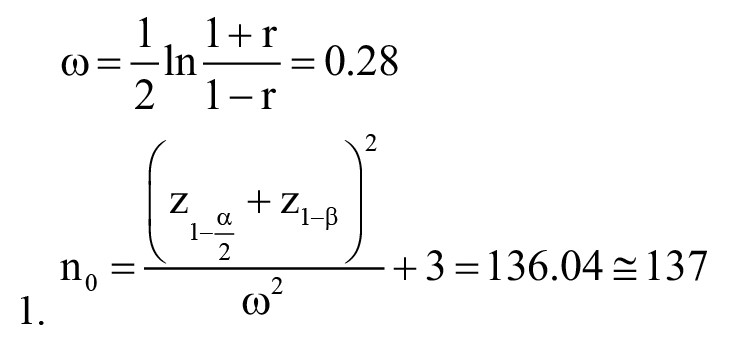
To determine the sample size, the following correlation formula (Equation 1) was used. Considering a power of 90%, an error level of 0.05 and a correlation of 0.27, the sample size was calculated to be at least 124.73, which was rounded up to 125 cases (the sample size was determined based on the study title and the degree of decay).
Results
According to the results, 81 children were older than 6 years (64.8%), while the remaining children were younger than 6 years. Among the participants, 64 children (51.2%) were girls, and the rest were boys. Additionally, 71 children (56.8%) had previous dental experience, 54 children (43.2%) had a sibling, and 59 children (47.2%) had a high school diploma. The remaining children had educational qualifications that included a bachelor’s degree (29.6%), a master’s degree (16.8%) and a doctorate or higher (0.8%), respectively. Furthermore, 91 children (72.8%) had an income level at or below the subsistence level, while the remaining children had an income that was below the subsistence level (24.8%) and above the subsistence level (2.4%).
Based on the results obtained, 65 cases (52%) exhibited low to moderate anxiety, while the rest had no anxiety (29.6%) or high to very high anxiety (18.4%), respectively. Regarding the frequency of tooth decay among the participants, 62 individuals (50.4%) had low levels of decay, while the rest had high levels. In terms of the severity of tooth decay, 45 individuals (36%) had a PUFA index of 2, while the remaining participants had a PUFA index of 1(35.2%) or a PUFA index of ≥3 (28.8%), respectively.
There was no significant relationship between dental anxiety and the rate and severity of dental caries by age. However, there was a significant relationship between the level of dental anxiety in children and the rate of caries in girls (P=0.027). Conversely, there was no significant relationship between the level of dental anxiety in children and the severity of caries by gender. Additionally, there was a significant relationship between the level of dental anxiety in children and the rate of caries concerning the number of siblings (P=0.018). However, no significant relationship was found between the level of dental anxiety in children and the severity of caries based on the number of siblings. Furthermore, there was no significant relationship between the level of dental anxiety in children and the level or severity of caries based on parental income, education, and previous dental experience.
Conclusion
There is no relationship between increased anxiety and an elevated rate and severity of caries. Additionally, factors such as age and socioeconomic factors—including parental education level, family income, and previous dental experience—do not influence the level of anxiety or the level and severity of caries.
Ethical Considerations
Compliance with ethical guidelines
This study was approved by the Ethics Committee of Guilan University of Medical Sciences, Rasht, Iran (Code: IR.GUMS.REC.1399.240).
Funding
This study did not receive any financial support from funding organizations in the public, commercial, or non-profit sectors.
Authors' contributions
Conceptualization, methodology, validation, supervision, project management and editing and finalization: Atousa Janshin; Data analysis, research, review, sourcing, writing the original draft and visualization: Elham Gholamhosseinpour.
Conflicts of interest
The authors declared no conflict of interest.
References
Dental caries is a transmissible infectious disease influenced by several factors [1]. Over the past few decades, the prevalence of dental caries in children living in developed countries has decreased; however, in developing countries, untreated dental caries remains a significant health problem that can have detrimental effects on children [2، 3]. The overall prevalence of caries in children in Iran is 93%, and the prevalence of untreated dental caries is 30% [2].
Untreated dental caries refers to severe cavities that can cause pain and discomfort, sleep disturbances, and behavioral problems, especially in young children. Additionally, untreated and severe dental caries may have negative effects on children’s overall health and quality of life [3]. It can also lead to chewing and feeding problems, decreased appetite, and subsequent weight loss.
Identifying clinical, socioeconomic, and demographic indicators associated with dental anxiety in children with untreated dental caries and attempting to reduce the impact of these factors, can influence how parents and dentists manage children’s oral health and prevent avoidance of dental treatment.
Methods
In this cross-sectional analytical study, 125 children aged 4-7 years with untreated dental caries who were referred to the School of Dentistry at Guilan University of Medical Sciences during the academic year 2019-2020 were included in the study. The inclusion criteria consisted of having at least one tooth with dental caries and a pufa index ≥1 (which indicates visible pulpal involvement, ulceration, fistula, or abscess in primary teeth), being aged 4-7 years, and providing written informed consent from a parent or primary guardian. Children with systemic or neurological diseases were excluded from the study.
The facial image scale (FIS) was used to assess dental anxiety in children. This scale consists of a row of five faces ranging from “very happy” to “very sad.” The faces are scored from 1 for the happiest face to 5 for the saddest face. The interviewer asked the child to select one of the faces (8). Scores were recorded and later categorized for analysis: 0=no anxiety (FIS score=1), 1=low to moderate anxiety (FIS scores=2 and 3), and 2=high to very high anxiety (FIS scores=4 and 5). All interviews were conducted in the dental waiting room.
Frequency and percentage were used to describe qualitative data, while Mean±SD were used for quantitative data. Appropriate descriptive tables and graphs were employed for both measurement scales. To examine the relationships and comparisons of groups, the chi-square test was used when the relevant assumptions were met; otherwise, Fisher’s exact test was applied. Additionally, to examine the simultaneous effects of variables in the model, binary logistic regression and ordinal logistic regression models were utilized. The software used for analysis was SPSS software, version 24 and the significance level for all tests was set at 0.05.
To determine the sample size, the following correlation formula (Equation 1) was used. Considering a power of 90%, an error level of 0.05 and a correlation of 0.27, the sample size was calculated to be at least 124.73, which was rounded up to 125 cases (the sample size was determined based on the study title and the degree of decay).
Results
According to the results, 81 children were older than 6 years (64.8%), while the remaining children were younger than 6 years. Among the participants, 64 children (51.2%) were girls, and the rest were boys. Additionally, 71 children (56.8%) had previous dental experience, 54 children (43.2%) had a sibling, and 59 children (47.2%) had a high school diploma. The remaining children had educational qualifications that included a bachelor’s degree (29.6%), a master’s degree (16.8%) and a doctorate or higher (0.8%), respectively. Furthermore, 91 children (72.8%) had an income level at or below the subsistence level, while the remaining children had an income that was below the subsistence level (24.8%) and above the subsistence level (2.4%).
Based on the results obtained, 65 cases (52%) exhibited low to moderate anxiety, while the rest had no anxiety (29.6%) or high to very high anxiety (18.4%), respectively. Regarding the frequency of tooth decay among the participants, 62 individuals (50.4%) had low levels of decay, while the rest had high levels. In terms of the severity of tooth decay, 45 individuals (36%) had a PUFA index of 2, while the remaining participants had a PUFA index of 1(35.2%) or a PUFA index of ≥3 (28.8%), respectively.
There was no significant relationship between dental anxiety and the rate and severity of dental caries by age. However, there was a significant relationship between the level of dental anxiety in children and the rate of caries in girls (P=0.027). Conversely, there was no significant relationship between the level of dental anxiety in children and the severity of caries by gender. Additionally, there was a significant relationship between the level of dental anxiety in children and the rate of caries concerning the number of siblings (P=0.018). However, no significant relationship was found between the level of dental anxiety in children and the severity of caries based on the number of siblings. Furthermore, there was no significant relationship between the level of dental anxiety in children and the level or severity of caries based on parental income, education, and previous dental experience.
Conclusion
There is no relationship between increased anxiety and an elevated rate and severity of caries. Additionally, factors such as age and socioeconomic factors—including parental education level, family income, and previous dental experience—do not influence the level of anxiety or the level and severity of caries.
Ethical Considerations
Compliance with ethical guidelines
This study was approved by the Ethics Committee of Guilan University of Medical Sciences, Rasht, Iran (Code: IR.GUMS.REC.1399.240).
Funding
This study did not receive any financial support from funding organizations in the public, commercial, or non-profit sectors.
Authors' contributions
Conceptualization, methodology, validation, supervision, project management and editing and finalization: Atousa Janshin; Data analysis, research, review, sourcing, writing the original draft and visualization: Elham Gholamhosseinpour.
Conflicts of interest
The authors declared no conflict of interest.
References
- Ramos-Jorge J, Pordeus IA, Ramos-Jorge ML, Marques LS, Paiva SM. Impact of untreated dental caries on quality of life of preschool children: Different stages and activity. Community Dentistry and Oral Epidemiology. 2014; 42(4):311-22. [DOI:10.1111/cdoe.12086] [PMID]
- Ramazani N, Rezaei S. Evaluation of the prevalence of clinical consequences of untreated dental caries using PUFA/pufa index in a group of Iranian children. Iranian Journal of Pediatrics. 2017; 27(1):e5016. [DOI:10.5812/ijp.5016]
- Gradella CM, Bernabé E, Bönecker M, Oliveira LB. Caries prevalence and severity, and quality of life in Brazilian 2-to 4-year-old children. Community Dentistry and Oral Epidemiology. 2011; 39(6):498-504. [DOI:10.1111/j.1600-0528.2011.00625.x] [PMID]
- Murthy AK, Pramila M, Ranganath S. Prevalence of clinical consequences of untreated dental caries and its relation to dental fear among 12-15-year-old schoolchildren in Bangalore city, India. European Archives of Paediatric Dentistry. 2014; 15(1):45-9. [DOI:10.1007/s40368-013-0064-1] [PMID]
- Brukiene V, Aleksejuniene J, Balciuniene I. Is dental treatment experience related to dental anxiety? A cross-sectional study in Lithuanian adolescents. Stomatologija. 2006; 8(4):108-15. [PMID]
- Nowak AJ. Pediatric dentistry: Infancy through adolescence. Amsterdam: Elsevier; 2019. [Link]
- Abanto J, Vidigal EA, Carvalho TS, Sá SN, Bönecker M. Factors for determining dental anxiety in preschool children with severe dental caries. Brazilian Oral Research. 2017; 31:e13.[DOI:10.1590/1807-3107bor-2017.vol31.0013] [PMID]
- Dean JA, Avery DR, McDonald RE. McDonald and Avery dentistry for the child and adolescent-E-book. Amsterdam: Elsevier Health Sciences; 2010. [Link]
- Iida H, Auinger P, Billings RJ, Weitzman M. Association between infant breastfeeding and early childhood caries in the United States. Pediatrics. 2007; 120(4):e944-e52. [DOI:10.1542/peds.2006-0124] [PMID]
- Taani DQ, El-Qaderi SS, Abu Alhaija ES. Dental anxiety in children and its relationship to dental caries and gingival condition. International Journal of Dental Hygiene. 2005; 3(2):83-7. [DOI:10.1111/j.1601-5037.2005.00127.x] [PMID]
- Akbay Oba A, Dülgergil CT, Sönmez IS. Prevalence of dental anxiety in 7-to 11-year-old children and its relationship to dental caries. Medical Principles and Practice. 2009; 18(6):453-7. [DOI:10.1159/000235894] [PMID]
- Ten Berge M, Veerkamp J, Hoogstraten J. The etiology of childhood dental fear: The role of dental and conditioning experiences. Journal of Anxiety Disorders. 2002; 16(3):321-9. [DOI:10.1016/S0887-6185(02)00103-2] [PMID]
- Liddell A, Murray P. Age and sex differences in children's reports of dental anxiety and self-efficacy relating to dental visits. Canadian Journal of Behavioural Science/Revue canadienne des sciences du comportement. 1989; 21(3):270-9. [DOI:10.1037/h0079819]
- Park SH, Lee NG, Ju HJ, Choi BY, Oh HW, Lee HS. Relationship of dental anxiety with oral health behavior and dental caries experience in adolescents. Journal of Korean Academy of Oral Health. 2015; 39(1):17-24. [DOI:10.11149/jkaoh.2015.39.1.17]
- Son TM, Ngoc VTN, Tran PT, Nguyen NP, Luong HM, Nguyen H-T, et al. Prevalence of dental fear and its relationship with primary dental caries in 7-year-old-children. Pediatric Dental Journal. 2019; 29(2):84-9. [DOI:10.1016/j.pdj.2019.04.002]
- Prathima G, Varghese AS, Sajeev R, Kayalvizhi G, Sanguida A, Balaji AS. Prevalence of dental fear and its relationship to dental caries and gingival disease among school children in Puducherry: A cross-sectional study. Journal of Advanced Clinical and Research Insights. 2017; 4(3):88-91. [Link]
- Wu L, Gao X. Children's dental fear and anxiety: Exploring family related factors. BMC Oral Health. 2018; 18(1):100. [DOI:10.1186/s12903-018-0553-z] [PMID]
- Merdad L, El-Housseiny AA. Do children's previous dental experience and fear affect their perceived oral health-related quality of life (OHRQoL)? BMC Oral Health. 2017; 17(1):47. [DOI:10.1186/s12903-017-0338-9] [PMID]
- Saatchi M, Abtahi M, Mohammadi G, Mirdamadi M, Binandeh ES. The prevalence of dental anxiety and fear in patients referred to Isfahan Dental School, Iran. Dental Research Journal. 2015; 12(3):248-53. [PMID]
- de Paula JS, Leite IC, de Almeida AB, Ambrosano GM, Mialhe FL. The impact of socioenvironmental characteristics on domains of oral health-related quality of life in Brazilian schoolchildren. BMC Oral Health. 2013; 13:10. [DOI:10.1186/1472-6831-13-10] [PMID]
- Goettems ML, Ardenghi TM, Demarco FF, Romano AR, Torriani DD. Children's use of dental services: Influence of maternal dental anxiety, attendance pattern, and perception of children's quality of life. Community Dentistry and Oral Epidemiology. 2012; 40(5):451-8. [DOI:10.1111/j.1600-0528.2012.00694.x] [PMID]
- Gururatana O, Baker SR, Robinson PG. Determinants of children's oral-health-related quality of life over time. Community Dentistry and Oral Epidemiology. 2014; 42(3):206-15. [DOI:10.1111/cdoe.12080] [PMID]
- Silveira ERD, Goettems ML, Demarco FF, Azevedo MS. Clinical and individual variables in children's dental fear: A school-based investigation. Brazilian Dental Journal. 2017; 28(3):398-404. [DOI:10.1590/0103-6440201601265] [PMID]
- Rojas-Alcayaga G, Uribe L, Barahona P, Lipari A, Molina Y, Herrera A, et al. Dental experience, anxiety, and oral health in low-income chilean children. Journal of Dentistry for Children. 2015; 82(3):141-6. [PMID]
- Alshoraim MA, El-Housseiny AA, Farsi NM, Felemban OM, Alamoudi NM, Alandejani AA. Effects of child characteristics and dental history on dental fear: Cross-sectional study. BMC Oral Health. 2018; 18(1):33. [DOI:10.1186/s12903-018-0496-4] [PMID]
- Torriani DD, Ferro RL, Bonow ML, Santos IS, Matijasevich A, Barros AJ, et al. Dental caries is associated with dental fear in childhood: findings from a birth cohort study. Caries Research. 2014; 48(4):263-70. [DOI:10.1159/000356306] [PMID]
- Kruger E, Thomson WM, Poulton R, Davies S, Brown RH, Silva PA. Dental caries and changes in dental anxiety in late adolescence. Community Dentistry and Oral Epidemiology. 1998; 26(5):355-9. [DOI:10.1111/j.1600-0528.1998.tb01973.x] [PMID]
Review Paper: Research |
Subject:
Special
Received: 2023/09/8 | Accepted: 2024/04/16 | Published: 2024/12/30
Received: 2023/09/8 | Accepted: 2024/04/16 | Published: 2024/12/30
| Rights and permissions | |
 |
This work is licensed under a Creative Commons Attribution-NonCommercial 4.0 International License. |

Copyright © The Author(s);
This is an open access article distributed under the terms of the
Creative Commons Attribution License (CC-By-NC),which permits use, distribution, and reproduction in any medium,
provided the original work is properly cited and is not used forcommercial purposes.
Contact Information