

Volume 34, Issue 4 (12-2025)
JGUMS 2025, 34(4): 410-423 |
Back to browse issues page



Research code: 162837287
Ethics code: IR.IAU.URMIA.REC.1402.115


Download citation:
BibTeX | RIS | EndNote | Medlars | ProCite | Reference Manager | RefWorks
Send citation to:


BibTeX | RIS | EndNote | Medlars | ProCite | Reference Manager | RefWorks
Send citation to:
Rahmanpour P, Farshbaf Maneisefat F, Rezae Moradali M. The Effectiveness of the Mother-child Companion Plan on Mother-fetal Attachment, Pregnancy Anxiety, and Self-compassion in Pregnant Mothers. JGUMS 2025; 34 (4) :410-423
URL: http://journal.gums.ac.ir/article-1-2760-en.html
URL: http://journal.gums.ac.ir/article-1-2760-en.html


1- Department of Psychology, Ur.C., Islamic Azad University, Urmia, Iran.
2- Department of Midwifery, Ur.C., Islamic Azad University, Urmia, Iran.
2- Department of Midwifery, Ur.C., Islamic Azad University, Urmia, Iran.
Keywords: Mother-fetal attachment, Pregnancy anxiety, Self-compassion, Pregnant mother, Mother-child companion plan
Full-Text [PDF 6078 kb]
(92 Downloads)
| Abstract (HTML) (841 Views)
Full-Text: (183 Views)
Introduction
Pregnancy is one of the most sensitive periods in a woman’s life [1]. Since the mother’s emotional state significantly impacts the internal state of the uterus and the health and development of the fetus, pregnancy anxiety can have various adverse consequences on the health of the mother and fetus [2]. Maternal-fetal attachment is considered a vital emotional bond between the mother and fetus, and a vital concept in the psychological and physical well-being of the mother and child [3]. Higher levels of maternal-fetal attachment are associated with increased levels of love, happiness, peace, respect, and other positive emotions [4]. Self-compassion can be defined as a positive emotional attitude towards oneself and a non-judgmental understanding of oneself, which has a positive effect on mothers’ fear of childbirth [5] and promotes mental well-being in women with unwanted pregnancies [6] and can play a key role in improving relationships with others during important events, such as pregnancy and postpartum [7].
Increasing awareness and skills during pregnancy prepares pregnant women for childbirth, improves their health, reduces common mood disorders during and after pregnancy, and prevents mortality and complications during pregnancy [8]. The mother-child companion plan training helps mothers strengthen their self-awareness and self-compassion, which are crucial factors in attachment relationships. By developing this skill, they can better understand, seek closeness, and respond more effectively to their children [9]. Educating mothers and practicing attachment behaviors reduce anxiety and improve mothers’ mental health. This is a unique and pioneering program for increasing fetal-maternal attachment during pregnancy, which increases positive expectations before birth and reduces negative expectations and distress during pregnancy [10, 11].
Since one of the goals of motherhood is to educate a generation with humane moral principles and build a culture and pass it on from one generation to another, it is essential to implement plans and programs that focus on maternal and child health and lead to the control and reduction of harm at the community level. Considering the importance of maternal-fetal attachment in pregnant women, the high prevalence of anxiety during pregnancy, and the adverse consequences of insecure attachment and anxiety on maternal health, and considering that the mother-child companion plan in the field of attachment education is currently being implemented in Iran and no research has been conducted on the effectiveness of this program so far, the present study was conducted to determine the effect of the mother-child companion plan on maternal-fetal attachment, pregnancy anxiety, and self-compassion in pregnant mothers.
Methods
This study employed an experimental design with a pre-test-post-test format, including a control group and a one-month follow-up period. The participants were 40 pregnant women who were referred to health centers in Urmia City, Iran, in 2023. They were selected using a purposeful sampling method and randomly assigned to two experimental and control groups. The experimental group participated in thirteen 90-minute sessions weekly and received training on the mother and child assistant plan. Questionnaires on mother-fetal attachment, pregnancy anxiety, and self-compassion were completed in the pre-test, post-test, and follow-up stages for two groups. SPSS software, version 25 was used to perform repeated measures analysis of variance (RMANOVA) and Benferroni tests for data analysis. All statistical analyses were performed at a confidence interval (CI) of 0.05.
Results
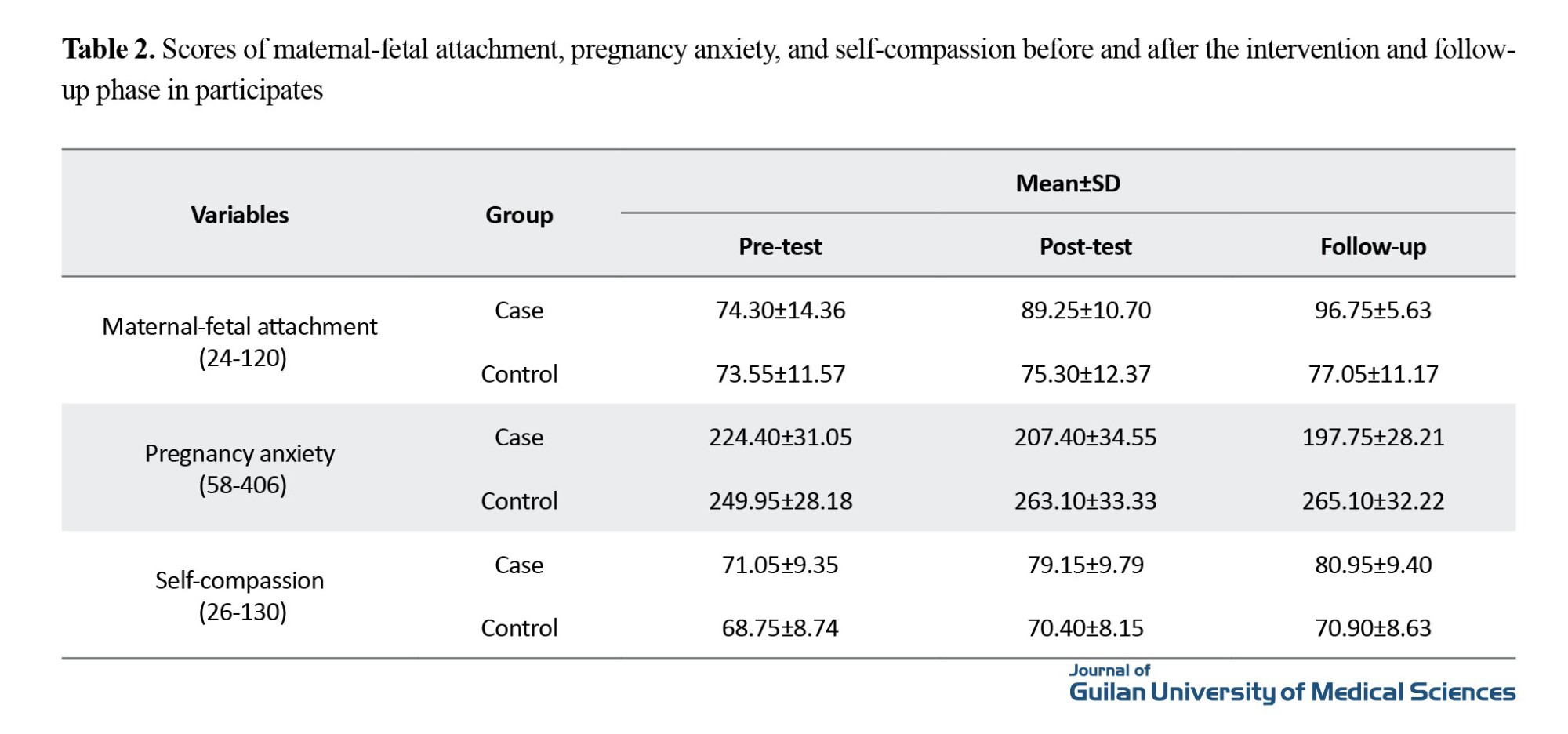
The research findings show that the average age, duration of marriage, and gestational age in the two experimental and control groups distributed similarly. (Table 1) The results showed an increase in mother-fetal attachment, a decrease in pregnancy anxiety, and an increase in self-compassion in the experimental group compared to the control group (P<0.001).
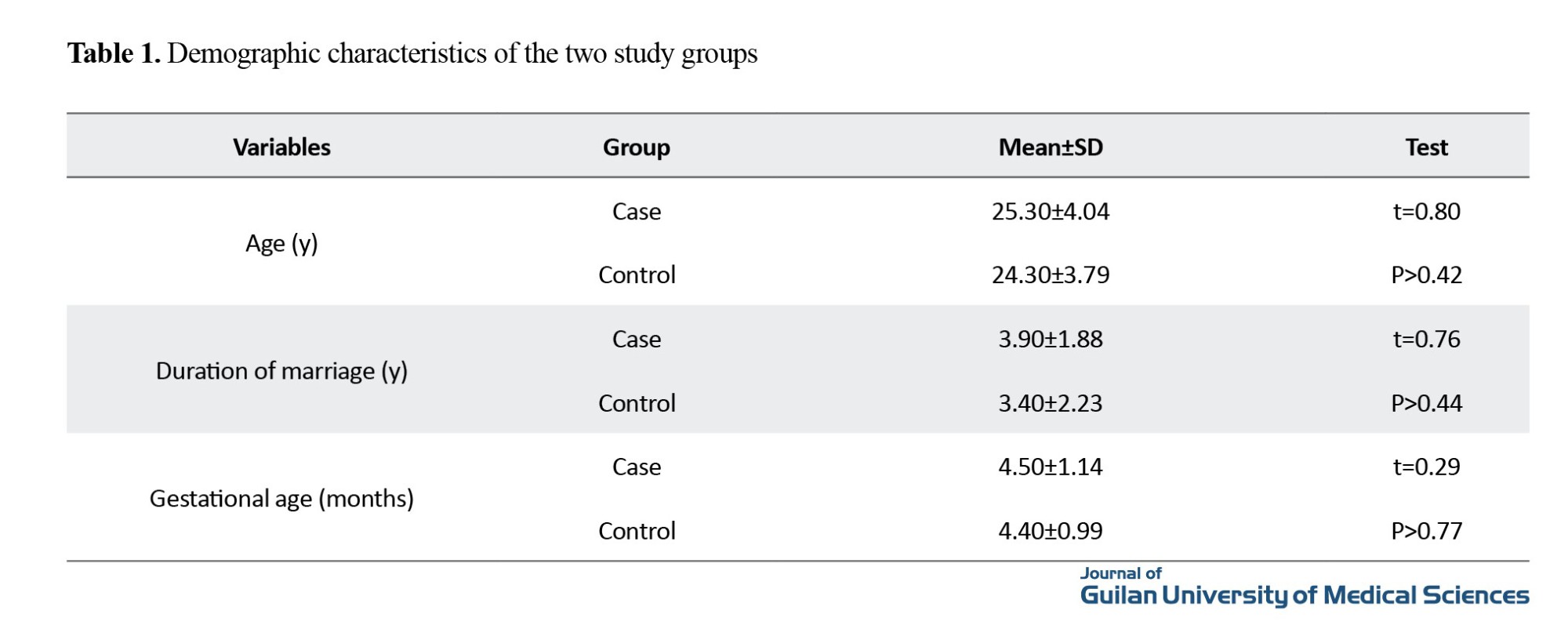
Table 2 The within-subject effect indicated a significant difference between pre-test, post-test, and follow-up scores over time in all three variables. The largest difference in average scores was observed between the pre-test and follow-up periods.
Conclusion
The mother-child support program positively affects the mental health of pregnant mothers and can play an important role in reducing common mood disorders during pregnancy and improving mother-fetal attachment. The results of the study can be useful in continuing the mother-child companion plan to prevent psychosocial challenges in pregnant mothers by program staff.
Ethical Considerations
Compliance with ethical guidelines
This study was approved by the Ethics Committee of Islamic Azad University, Urmia Branch, Urmia, Iran (Code: IR.IAU.URMIA.REC.1402.115).
Funding
This article was based on a research project. This research did not receive any funding from public, commercial, or non-profit agencies.
Authors contributions
Drafting of the manuscript: Pardis Rahmanpour; Critical revision: Farnaz Farshbaf Maneisefat and Monireh Rezae Moradali; Study supervision: Farnaz Farshbaf Maneisefat; Conceptualization, study design, data collection, and data analysis: All authors.
Conflicts of interest
The authors declared no conflicts of interest.
Acknowledgements
The authors thank the Research Vice Chancellor of Islamic Azad University, Urmia Branch, and the mothers who participated in this study.
Pregnancy is one of the most sensitive periods in a woman’s life [1]. Since the mother’s emotional state significantly impacts the internal state of the uterus and the health and development of the fetus, pregnancy anxiety can have various adverse consequences on the health of the mother and fetus [2]. Maternal-fetal attachment is considered a vital emotional bond between the mother and fetus, and a vital concept in the psychological and physical well-being of the mother and child [3]. Higher levels of maternal-fetal attachment are associated with increased levels of love, happiness, peace, respect, and other positive emotions [4]. Self-compassion can be defined as a positive emotional attitude towards oneself and a non-judgmental understanding of oneself, which has a positive effect on mothers’ fear of childbirth [5] and promotes mental well-being in women with unwanted pregnancies [6] and can play a key role in improving relationships with others during important events, such as pregnancy and postpartum [7].
Increasing awareness and skills during pregnancy prepares pregnant women for childbirth, improves their health, reduces common mood disorders during and after pregnancy, and prevents mortality and complications during pregnancy [8]. The mother-child companion plan training helps mothers strengthen their self-awareness and self-compassion, which are crucial factors in attachment relationships. By developing this skill, they can better understand, seek closeness, and respond more effectively to their children [9]. Educating mothers and practicing attachment behaviors reduce anxiety and improve mothers’ mental health. This is a unique and pioneering program for increasing fetal-maternal attachment during pregnancy, which increases positive expectations before birth and reduces negative expectations and distress during pregnancy [10, 11].
Since one of the goals of motherhood is to educate a generation with humane moral principles and build a culture and pass it on from one generation to another, it is essential to implement plans and programs that focus on maternal and child health and lead to the control and reduction of harm at the community level. Considering the importance of maternal-fetal attachment in pregnant women, the high prevalence of anxiety during pregnancy, and the adverse consequences of insecure attachment and anxiety on maternal health, and considering that the mother-child companion plan in the field of attachment education is currently being implemented in Iran and no research has been conducted on the effectiveness of this program so far, the present study was conducted to determine the effect of the mother-child companion plan on maternal-fetal attachment, pregnancy anxiety, and self-compassion in pregnant mothers.
Methods
This study employed an experimental design with a pre-test-post-test format, including a control group and a one-month follow-up period. The participants were 40 pregnant women who were referred to health centers in Urmia City, Iran, in 2023. They were selected using a purposeful sampling method and randomly assigned to two experimental and control groups. The experimental group participated in thirteen 90-minute sessions weekly and received training on the mother and child assistant plan. Questionnaires on mother-fetal attachment, pregnancy anxiety, and self-compassion were completed in the pre-test, post-test, and follow-up stages for two groups. SPSS software, version 25 was used to perform repeated measures analysis of variance (RMANOVA) and Benferroni tests for data analysis. All statistical analyses were performed at a confidence interval (CI) of 0.05.
Results
The research findings show that the average age, duration of marriage, and gestational age in the two experimental and control groups distributed similarly. (Table 1) The results showed an increase in mother-fetal attachment, a decrease in pregnancy anxiety, and an increase in self-compassion in the experimental group compared to the control group (P<0.001).
Table 2 The within-subject effect indicated a significant difference between pre-test, post-test, and follow-up scores over time in all three variables. The largest difference in average scores was observed between the pre-test and follow-up periods.
Conclusion
The mother-child support program positively affects the mental health of pregnant mothers and can play an important role in reducing common mood disorders during pregnancy and improving mother-fetal attachment. The results of the study can be useful in continuing the mother-child companion plan to prevent psychosocial challenges in pregnant mothers by program staff.
Ethical Considerations
Compliance with ethical guidelines
This study was approved by the Ethics Committee of Islamic Azad University, Urmia Branch, Urmia, Iran (Code: IR.IAU.URMIA.REC.1402.115).
Funding
This article was based on a research project. This research did not receive any funding from public, commercial, or non-profit agencies.
Authors contributions
Drafting of the manuscript: Pardis Rahmanpour; Critical revision: Farnaz Farshbaf Maneisefat and Monireh Rezae Moradali; Study supervision: Farnaz Farshbaf Maneisefat; Conceptualization, study design, data collection, and data analysis: All authors.
Conflicts of interest
The authors declared no conflicts of interest.
Acknowledgements
The authors thank the Research Vice Chancellor of Islamic Azad University, Urmia Branch, and the mothers who participated in this study.
References
- Kane HS, Schetter CD, Glynn LM, Hobel CJ, Sandman CA. Pregnancy anxiety and prenatal cortisol trajectories. Biological Psychology. 2014; 100:13-9. [DOI:10.1016/j.biopsycho.2014.04.003] [PMID]
- Cunningham FG, Leveno KJ, Bloom SL, Dashe JS, Hoffman BL, Casey BM, et al. Williams obstetrics, 25e. New York: McGraw-Hill Education; 2018. [Link]
- Blackmore ER, Gustafsson H, Gilchrist M, Wyman C, O’Connor TG. Pregnancy-related anxiety: Evidence of distinct clinical significance from a prospective longitudinal study. Journal of Affective Disorders. 2016; 197:251-8. [DOI:10.1016/j.jad.2016.03.008] [PMID]
- Rahimnejad A, Davati A, Garshasbi A. [Relation between spiritual health and anxiety in pregnant women referred to Shaheed Mostafa Khomeini hospital in 2018 (Persian)]. Daneshvar Medicine. 2020; 27(1):11-8. [DOI:10.22070/dmed.27.140.11]
- Ustunsoz A, Guvenc G, Akyuz A, Oflaz F. Comparison of maternal-and paternal-fetal attachment in Turkish couples. Midwifery. 2010; 26(2):e1-9. [DOI:10.1016/j.midw.2009.12.006][PMID]
- Alhusen JL. A literature update on maternal-fetal attachment. Journal of Obstetric, Gynecologic & Neonatal Nursing. 2008; 37(3):315-28. [DOI:10.1111/j.1552-6909.2008.00241.x][PMID]
- Wahyuntari E, Puspitasari I. Anxiety and maternal fetal attachment. International Journal of Health Science and Technology. 2021; 2(2):64-70. [DOI:10.31101/ijhst.v2i2.1850]
- Erbil N. Relationship of self-compassion and fear of childbirth among pregnant women. International Journal of Caring Sciences. 2022; 15(1):255-62. [Link]
- Salemi Ghomshe A, Kaboodi M, Foroghi AA, Kaboodi B. [The impacts of self-compassion training on subjective well-being and maternal-fetal attachment in women experiencing unintended pregnancy: A quasi-experimental study (Persian)]. Research in Clinical Psychology and Counseling. 2023; 13(1):174-90. [DOI:10.22067/tpccp.2023.73075.1186]
- Abbaszadeh H, Tavoli A, Dehshiri G. [The mediating role of self-compassion in the relationship between body image and severity of anxiety and depression in pregnant women (Persian)]. Women’s Studies Sociological and Psychological. 2023; 20(4):166-203. [DOI:10.22051/jwsps.2022.35958.2433]
- Boland RJ. Kaplan and Sadock’s synopsis of psychiatry. [F. Rezaei, F. Hadavandkhani, P. Jamshidian Qalashahi,AH. Esfandzad Persian trans]. Tehran: Arjmand; 2022. [Link]
- Azita MK. [Family-centered empowerment plan - mother and child supporter (Persian)]. Tehran: National Welfare Organization; 2022. [Link]
- Mahmoudi P, Elyasi F, Nadi A, Ahmad Shirvani M. The effect of maternal-foetal attachment-based training programme on maternal mental health following an unintended pregnancy. Journal of Reproductive and Infant Psychology. 2023; 41(1):26-42. [DOI:10.1080/02646838.2021.1959538] [PMID]
- Sabancı Baransel E, Uçar T. The effect of an attachment‐based intervention program on attachment, expectation, and stress in pregnant women: A randomized controlled study. Japan Journal of Nursing Science. 2023; 20(4):e12549. [DOI:10.1111/jjns.12549] [PMID]
- Delavar A. [Research methodology in psychology and educational sciences (Persian)]. Tehran: Virayesh; 2022. [Link]
- Taavoni S, Ahadi M, Ganji T, Hosseini F. [Comparison of maternal fetal attachment between primgravidas and multigravidas women with past history of fetal or neonatal death (Persian)]. Iran Journal of Nursing. 2008; 21(53):53-61. [Link]
- Babanazari L, Kafi SM. [Comparative study of mental health and its relative demographic factors in different periods of pregnancy (Persian)]. Research in Psychological Health. 2007; 1(2):44-52. [Link]
- Van den Bergh BRH. The influence of maternal emotions during pregnancy on fetal and neonatal behavior. Journal of Prenatal & Perinatal Psychology and Health. 1990; 5(2):119-30. [Link]
- Neff KD. The development and validation of a scale to measure selfcompassion. Self and Identity. 2003; 2(3):223-50. [DOI:10.1080/15298860309027]
- Albertson ER, Neff KD, Dill-Shackleford KE. Self-compassion and body dissatisfaction in women: A randomized controlled trial of a brief meditation intervention. Mindfulness. 2015; 6:444-54. [DOI:10.1007/s12671-014-0277-3]
- Khosravi S, Sadeghi M, Yabandeh M. [Psychometric validity of the self-compassion scale (SCS) (Persian)]. Psychological Methods and Models. 2013; 3(13):47-58. [Link]
- Abasi E, Keramat A, Borghei NS, Goli S, Farjamfar M. Evaluating the effect of prenatal interventions on maternal-foetal attachment: A systematic review and meta‐analysis. Nursing open. 2021; 8(1):4-16. [DOI:10.1002/nop2.648] [PMID]
- Nazik E, Yikar K, Var E. Effect of childbirth education classes on prenatal attachment. New Trends and Issues Proceedings on Humanities and Social Sciences. 2017; 4(2):73-9. [DOI:10.18844/prosoc.v4i2.2732]
- Yuen WS, Lo HC, Wong WN, Ngai FW. The effectiveness of psychoeducation interventions on prenatal attachment: A systematic review. Midwifery. 2022; 104:103184. [DOI:10.1016/j.midw.2021.103184] [PMID]
- Nishikawa M, Sakakibara H. Effect of nursing intervention program using abdominal palpation of Leopold’s maneuvers on maternal-fetal attachment. Reproductive Health. 2013; 10:12. [DOI:10.1186/1742-4755-10-12] [PMID]
- Jang SH, Kim IJ, Lee SH. Social support and maternal-fetal attachment in unmarried pregnant women in Korea: Does self-esteem play a mediating role. International Journal of Bio-Science and Bio-Technology. 2015; 7(6):131-40. [DOI:10.14257/ijbsbt.2015.7.6.14]
- Hoseini S, Motaghi Z, Nazari AM, Goli S. [Evaluation of effectiveness midwifery counseling with cognitive-behavioral approach to maternal-fetal attachment in pregnant women with unwanted pregnancy (Persian)]. Avicenna Journal of Clinical Medicine. 2020; 27(2):85-93 [DOI:10.29252/ajcm.27.2.85]
- Bilgin NÇ, Ak B, Ayhan F, Koçyiğit FÖ, Yorgun S, Topçuoğlu MA. Effects of childbirth education on prenatal adaptation, prenatal and maternal attachment. The Anatolian Journal of Family Medicine. 2020; 3(2):128. [DOI:10.5505/anatoljfm.2020.60352]
- Azogh M, Shakiba M, Navidian A. [The effect of cognitive behavioral training on maternal-fetal attachment in subsequent pregnancy following stillbirth (Persian)]. Hayat. 2018; 24(1):71-83. [Link]
- Toosi M, Akbarzadeh M, Zare N, Sharif F. [Comparison of the effects of attachment behavior and relaxation training on maternal fetal attachment and infant in prime pregnant women (Persian)]. Journal of Fundamentals of Mental Health. 2014; 16(62):142-9. [Link]
- Hasanabadi H, Esmaili H, Tafazzoli M, Abbasi E. The effect of training maternal-fetal attachment behavior on primipara maternal mental health in the third trimester of pregnancy. Journal of Sabzevar University of Medical Sciences. 1970; 15(2):104-9. [Link]
- Rahimi F, Moenimehr M. [Investigating non-pharmacologic treatment methods in reducing anxiety in pregnant women of low-risk and high-risk groups: A systematic review (Persian)]. Internal Medicine Today. 2022; 28(3):300-29. [DOI:10.32598/hms.28.3.3378.2]
- Bodaghi E, Alipour F, Bodaghi M, Nori R, Peiman N, Saeidpour S. [The role of spirituality and social support in pregnant women’s anxiety, depression and stress symptoms (Persian)]. Community Health Journal. 2017; 10(2):72-82. [Link]
- Hosseinian S, Yazdi SM, Alavinezhad S. [The effectiveness of fetal attachment training program on maternal-fetal relationship and mental health of pregnant women (Persian)]. Quarterly Journal of Child Mental Health. 2016; 2(4):75-87. [Link]
- Madhavanprabhakaran GK, D’Souza MS, Nairy K. [Effectiveness of childbirth education on nulliparous women’s knowledge of childbirth preparation, pregnancy anxiety and pregnancy outcomes (Persian)]. Nursing and Midwifery Studies. 2017; 6(1):e32526. [DOI:10.5812/nmsjournal.32526]
- Imanparast R, Bermas H, Danesh S, Ajoudani Z. [The effect of cognitive behavior therapy on anxiety reduction of first normal vaginal delivery (Persian)]. The Journal of Shahid Sadoughi University of Medical Sciences. 2014; 22(1):974-8. [Link]
- Hossein Khanzadeh A, Rostampour A, Khosrojavid M, Nedaee N. [Effectiveness of cognitive-behavioral education on anxiety during pregnancy and delivery method in primiparous women (Persian)]. Journal of Nursing Education. 2017; 5(6):24-32. [DOI:10.21859/jne-05064]
- Shen Q, Huang CR, Rong L, Ju S, Redding SR, Ouyang YQ, et al. Effects of needs-based education for prenatal anxiety in advanced multiparas: A randomized controlled trial. BMC Pregnancy and Childbirth. 2022; 22(1):301.[DOI:10.1186/s12884-022-04620-3] [PMID]
- Aghaie A, Khanjani Veshki S, Pasha S. The effectiveness of compassion-based education on reducing emotional turbulence in women experiencing marital infidelity. Journal of Applied Psychological Research. 2021; 12(1):299-313. [DOI:10.5812/jjhs.103619]
- Ilyas U, Tariq Z, Asim J, Arshad Z. Experiential avoidance, thought suppression, meta‐cognition, and body‐checking among women during pregnancy and postpartum: Buffering effect of self‐compassion. International Journal of Gynecology & Obstetrics. 2024; 165(3):988-96. [DOI:10.1002/ijgo.15400][PMID]
- Duncan LG, Coatsworth JD, Greenberg MT. A model of mindful parenting: Implications for parent-child relationships and prevention research. Clinical Child and Family Psychology Review. 2009; 12:255-70. [DOI:10.1007/s10567-009-0046-3][PMID]
- Cranswick C. Self-compassion: What meaning and role does it play in the lives of women who experience anxiety and depression in the perinatal period [master thesis]. Fremantle: The University of Notre Dame Australia; 2017. [Link]
- Bögels SM, Lehtonen A, Restifo K. Mindful parenting in mental health care. Mindfulness. 2010; 1(2):107-20. [DOI:10.1007/s12671-010-0014-5] [PMID]
- Saeedi Z, Ghorbani N, Sarafraz MR, Sharifian MH. [The relationship between self-compassion, self-esteem and self-conscious emotions regulation (Persian)]. Journal of Research in Psychological Health. 2012; 6(3):1-9. [Link]
Review Paper: Research |
Subject:
Special
Received: 2024/12/30 | Accepted: 2025/03/10 | Published: 2026/01/1
Received: 2024/12/30 | Accepted: 2025/03/10 | Published: 2026/01/1
| Rights and permissions | |
 |
This work is licensed under a Creative Commons Attribution-NonCommercial 4.0 International License. |

Copyright © The Author(s);
This is an open access article distributed under the terms of the
Creative Commons Attribution License (CC-By-NC),which permits use, distribution, and reproduction in any medium,
provided the original work is properly cited and is not used forcommercial purposes.
Contact Information